On Things in Games

Container category for everything game-related


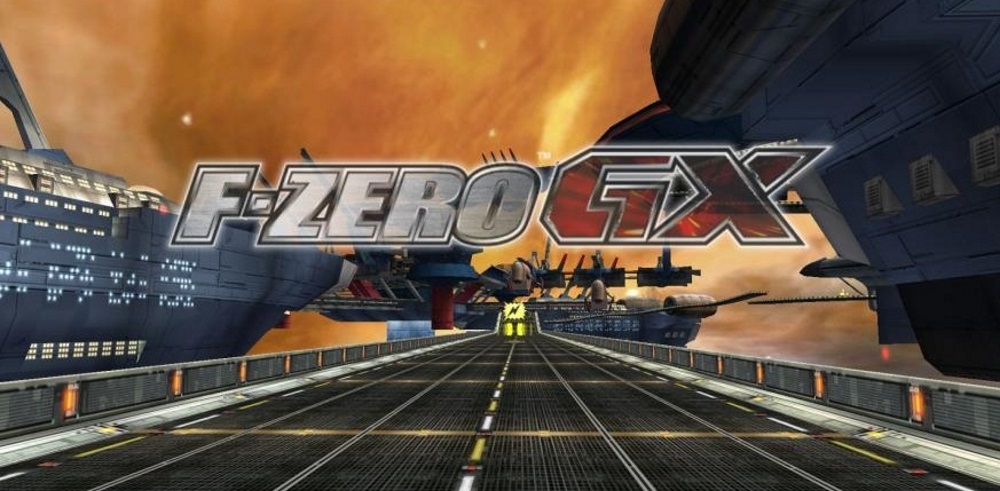
  F-zero GX was one of my personal favorites during the Gamecube generation. Its sense of speed, focus on skill and ability to (almost) always create thrilling races made me and my brother play it for years on end. It perhaps isn’t strange it was a major inspiration for the Wheelchair Racer project during my second year at university. This article is a translation of an analysis written during my third year at university. As part of a “game theory and play mechanics” course, the analysis mostly covered the mechanics of the game. Also, it was written in Swedish. As such, I couldn’t use it as-was on this blog.


F-Zero GX analysis: Multiplayer game mechanics


Five years ago, I wrote a post here basically complaining about game tutorials. Having spent the last year on Cloudbuilt alone, and spending the slight dev time I had on its tutorial level (I had a handful of other things to do), I believe it’s time to explain myself to my 5-year-younger self. In other words, consider this a “making of a tutorial level”.

On Making a Tutorial


And if you actually got that, we should totally meet. I have no idea what the Tank or Healer is, but I am probably both those guys?
In addition to my intended post this week, I wanted to throw in an important note. I will be going to San Fransisco (which, as a note, is literally half a world away) to talk about, show and play Cloudbuilt. So, let’s babble a bit to justify this as a “Life Note”. It’s the first time to the Americas, I’ve been looking forward to going to GDC for years now and… yeah. It’ll be great. But I don’t run a blog to talk about my life (I’ll save that for my retirement, if the world cares… hah, who am I kidding, this is the Internet!), and I don’t post this just to express happiness. I want to reach out for finding meetings. I would love chatting with press, of course: Being a small indie studio, making news is our best option. We make news only by having a cool game. And do we have a cool game! Which of course is super-subjective, and I of anybody have some kind of self-interest to claim so; but, honestly, having played the game for months I still find it fun to try new challenges and revised levels. But, hey, don’t take my word for it […]

Life-note: Going to GDC, looking for meetings


Rawr!
In the wake of the release of Aliens: Colonial Marines, the debate about previews re-surfaced. Total Halibut made a 20-minite case for why previews are anti-consumer and generally hurts the industry. Jim Sterling of the Jimquisition made a very verbal case, as well, calling profilic developers “liars”. A colleague linked the latter, whereon I decided to write a post about it. Not having thought as much about this topic in advance as I did for last week’s Violence in Video Games, I had to do some research. And I found this is kind of a thorny topic, but one well worth investigating. After these two videos, surely we can claim lock-in previewing a bad game on false premises is a problem. Let’s begin by finding the source of  and, rather than focus on what the gaming press or consumers can do to solve it, which Halibut and Jim seems to have done so well, let’s focus on what the games business can do itself. Disclaimer: All opinions in this article are my own, and not necessarily those of Coilworks as a whole. I may have a voice, but I’m just one voice. I will not dictate what we think, but […]

On Pre-orders


Last year, a debate took place regarding the level of Violence in Video Games. In May, The E3 press briefings in general got Nathan Grayson on RPS to react, and The last of Us in particular managed to get Kris Graft on Gamasutra to react with  “If you were an average Joe who strolled into one of these E3 press conferences, and saw hundreds of people hoot and holler when a guy’s face gets blown off in high-resolution detail, you might think you walked into an ancient Roman coliseum.” Towards the end of the year (or, rather, this January) Leigh Alexander, also on Gamasutra, wrote a more nuanced article about when it might actually be good sometimes. So you could think all has been said, especially since these people are a lot better with words than I am. However, violence in video games has been a topic I’ve been thinking about for years, and I wouldn’t like the debate just pass by without speaking my mind.

On Violence in Video Games


I just got back from a hectic, crazy fun and invaluably… valuable week in Cologne. I could do a long write-up about this with impressions, and I will later, but for now I’m happy to just break my own silence to say that’s what’s been up. A collegue reminded me after my last post that what I type here could colour the perception of Coilworks. So I really should stress that what I type here is my own opinions and thoughts.

Back from GDCE/gamescom 2012


Wow, what a week! Last weekend, we at Coilworks uploaded an announcement trailer for our game Cloudbuilt. A colleague expressed an expectaton of at least 500 views, which I found optimistic. We had worked hard on the promotion for Ovelia: The Wake, reaching just a few hundred, so how would we reach that when most videos on youtube reach next to no-one? Oh, how wrong we turned out to be.

Finally, Breakthrough


Last year, I volunteered at “Game Developer Conference – Europe” in Cologne, and I’m happy to say I’ll get back this year! Last year’s visit was really great. A lot of new people to meet and greet, loads of valuable presentations and my first impression of an international games fair. It was probably the latter that left the strongest lasting impression. I had checked the prices before-hand, in an attempt to get my head around the cost-structure of marketing, and I noticed it was *expensive*. Like, a thousand dollars per square meter expensive. Just for the floor space. So when I entered the halls and saw giant monters with loads of empty space in them, I was baffled – how these guys could complain about risk and profits and spend this kind of money on empty space was beyond me (it later turned out those plazas was intended to hold a crowd, so it wasn’t so wasteful after all). And on top of that, it was 5-10 meter high structures, massive screens and speakers for trailers and of course dozens of computers for the games, gladly with multiple screens so the line outside the booth could watch. Add to that, […]

Pre-travel GDC-Europe/gamescom -12


It’s all a matter of scale, really. I’ve always had an interest in game design. I didn’t know that’s what it was called at first, I just found it fun to draw fictional maps on paper, imagining boss-battles play out in my head and – more often than not – imagine what game X would be like if I got to make a game like it. After playing World of Warcraft… no, that’s wrong.. after nudging Interface Elements within an Interface for more time than actually playing the game, just to throw the Interface away for a new one as soon as I finished… I realized what I was doing. Meanwhile, in a completely different part of the head between my shoulders, some brain cells started having opinions. And a lot of them. And discussing the topic of politics back and forth. And, suddenly, I was knee-deep into student union politics while studying games design. And felt like both parts benefited for the other. I believe I now know why. Ask yourself, what is politics, really? Some likely say “a bunch of people who know and do nothing but talk”. Others may say “Game of Thrones, but less action (and […]

Politics is Game Design


The European Court was recently requested by the German federal court to answer the following questions (shortened for readability, full quotes can be found through sources liked at the bottom): 1.      Is the person who can rely on exhaustion of the right to distribute a copy of a computer program a “lawful acquirer”? 2.      If ‘yes’: is the right to distribute a copy of a computer program exhausted […] when the acquirer has made the copy with the rightholder’s consent by downloading the program from the internet onto a data carrier? 3.      If 2 is “yes”: can a person who has acquired a “used” software licence for generating a program copy as “lawful acquirer” […] also rely on exhaustion of the right to distribute the copy of the computer program made by the first acquirer with the rightholder’s consent by downloading the program from the internet onto a data carrier if the first acquirer has erased his program copy or no longer uses it? In which the reply was (again, in shortened form): 1.     … the right of distribution of a copy of a computer program is exhausted if the copyright holder who has authorised … a right to use that copy for […]

Initial Thoughts on Second-hand Sales Rulings


My old university pal, and newly-become level designer at Coilworks, had prepared. With a pal, he’d bought energy drinks, pop corn and potato chips to survive a long night of E3 pre-conference briefings. They were both very prepped up for it – their excitement was notable – as they awaited the first conference… At the university game dev club, a few-year-old tradition of gathering for the briefings was about to take place. Like how Swedes gathered (and, to some degree, still gather) around the television at 3 PM every Christmas Eve for Disney cartoons, these 20-odd gamers gathered to follow their Cristmas… They were expecting cool new games. Sequels to long-hibernated series of old and a lot of entertaining quotes to shake things up. They were excited about this like kids are excited about Christmas. When I left said level designer today, after the media briefings were over, they were very dissapointed. Almost a bit crushed. The briefings hadn’t been like they expected at all. Rather than getting the presents they wished for, they got all of those things you know you should thank for but really didn’t want in the first place. Like games that weren’t for them. Or […]

E3 – what it is, and what gamers want it ...


While I studied, I believed starting your own would be some kind of short-cut to having a job. After all, all you have to do is start it and no-one can filter you out!  I sure missed an important aspect of it – you want to be paid to really call it a “job”. And getting there takes a lot of time and a lot of work. Thankfully, we’re fortunate enough in Sweden to have government-funded university education for up to six years of studies. Which means, you can start that company and study to get the money you need. Drawback, of course, being you have to spend time studying. Sometimes more, sometimes less. Here in Skövde, we’ve also been fortunate enough to have an “entrepreneurship education”, a one-year program teaching very basic economics, marketing and project leading, all while writing a business plan. And the best part have been that it basically leaves you loads of time for that company you’re working on! But, as I mentioned, that means you sooner or later will need to put time aside to study. Like a weekend. Like right now. And, as with all students who have to study something difficult to […]

Distractions


When doing these “thinking”-posts, it’s usually about a thought that just arrived in my head and which I have to print down quickly. This one has gnawed on my head for awhile – education kind of does that to you. For those finding this via Google, this won’t be a definition rather than an exploration. This piece will cover what the game, in itself, is, and sometimes touch what the medium is, but I don’t intend to cover what play is or what gaming is. A video game, as far as I’ve been thinking, is in a position in the middle of a Venn-diagram of four areas: Games, Culture, Technology and Business. I’ll explain them in that order, even though they all affect each another.

Thinking: What is a video game?


Reading Richard Clark’s opinion piece “Is Death In Games Cheap?”, I got thinking about death in games. Some of the comments gave more stuff for thought, and my imagination ran wild. How can games emulate death meaningfully, why do we care about death – and what is death, anyway? Let’s start by defining death. When defining something, wikipedia is often helpful, so let’s ask them: “Death is the termination of the biological functions that define a living organism.” From http://en.wikipedia.org/wiki/Death Death, in English, is that a living being is gone. So why would we care? Based on nothing but my own experiences, it seems like when we humans start to care about something, we’re crushed when its damaged or gone. Its clearly the case with other people. As we get to know people, we start to care. As we start to care, we will mourn the loss of him/her. And the longer you’ve known them, the closer they’ve been, the worse it gets. Compare a far-away relative with an old friend, for example. Interestingly, the same thing seems to account for non-living items. Remember that new CD, watch, phone, vase? Or perhaps an old gift? Surely, it’s frustrating when it […]

Thoughts About Death in Games


For a few weeks now I’ve been studying about AI in computer games, wishing to know what makes it so difficult and perhaps learn what makes a “good” AI opponent/side-kick. Turns out the course was all about the programming of it (which I should’ve known, as it was a programmer course called “AI programming for computer games”), but after some scratch-the-surface research (ask people and ask google) I found no course (at least in Sweden) about the subject. So I started googling if there was anything released on the topic, and did find a few worthwhile sites to read. I’ll try to not make it another Link-Tips, even though it’s very tempting (and way easier and faster). The first impression of this quick research is that computer games AI is a fairly programmer-dominated area. Most of the links appearing gives the impression of code-related tasks, such as techniques here and there and stuff. But just a few links away and I started to discover some really interesting things. First off a page I read a long time ago and been trying to find again ever since – a very design-oriented piece giving 7 ways to make the AI opponent smarter. […]

What makes a “smart” AI?


Reading this gamasutra article, a thought suddenly struck me: Often the lack of immerssion, as I see it, is because the setting of the first person games are very unimmersive or, shall we say, doesn’t really suspend my disbelief. After all, how much sense does it make to be a super duper soldier running through a war and shooting people all over the place without getting a scratch (“game over”s not included)? How much does it help that there’s barely any physical “self” on your screen? I’d answer “Not much” on both of them. Which makes me wonder “what could be a better situation to actually try what the first person perspective is capable of?” and about a few milliseconds after the first thought struck, the next one did: A non-combat oriented RPG! I don’t know what such a game might look like, apart from being a game where you run around, solve people’s troubles and the core isn’t about killing stuff. Sure, combat may be there (it does give a bit of reason to why the quest givers can’t do their own quests and adds some danger/tention when needed), but it wouldn’t be the verb everything else is build […]

Thinking: What about a FPRPG?