Gameplay design


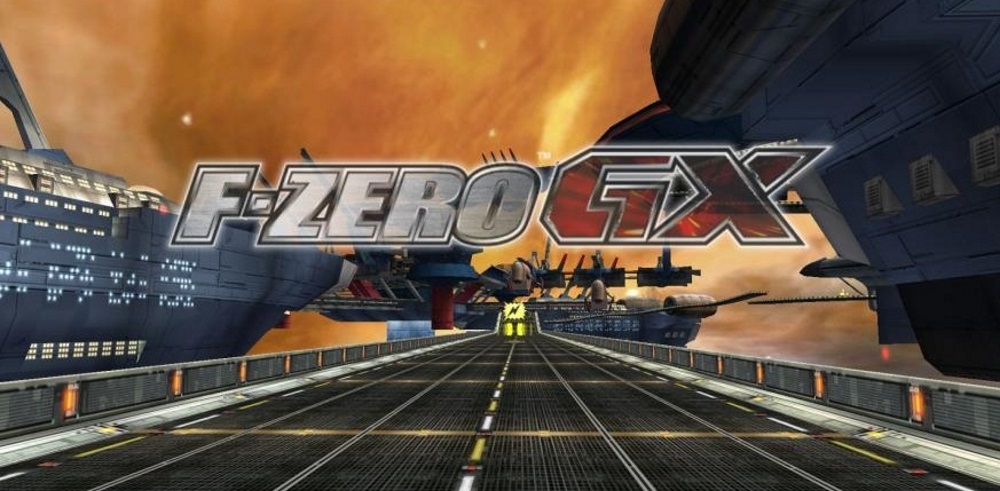
  F-zero GX was one of my personal favorites during the Gamecube generation. Its sense of speed, focus on skill and ability to (almost) always create thrilling races made me and my brother play it for years on end. It perhaps isn’t strange it was a major inspiration for the Wheelchair Racer project during my second year at university. This article is a translation of an analysis written during my third year at university. As part of a “game theory and play mechanics” course, the analysis mostly covered the mechanics of the game. Also, it was written in Swedish. As such, I couldn’t use it as-was on this blog.

F-Zero GX analysis: Multiplayer game mechanics


It’s all a matter of scale, really. I’ve always had an interest in game design. I didn’t know that’s what it was called at first, I just found it fun to draw fictional maps on paper, imagining boss-battles play out in my head and – more often than not – imagine what game X would be like if I got to make a game like it. After playing World of Warcraft… no, that’s wrong.. after nudging Interface Elements within an Interface for more time than actually playing the game, just to throw the Interface away for a new one as soon as I finished… I realized what I was doing. Meanwhile, in a completely different part of the head between my shoulders, some brain cells started having opinions. And a lot of them. And discussing the topic of politics back and forth. And, suddenly, I was knee-deep into student union politics while studying games design. And felt like both parts benefited for the other. I believe I now know why. Ask yourself, what is politics, really? Some likely say “a bunch of people who know and do nothing but talk”. Others may say “Game of Thrones, but less action (and […]

Politics is Game Design


Reading Richard Clark’s opinion piece “Is Death In Games Cheap?”, I got thinking about death in games. Some of the comments gave more stuff for thought, and my imagination ran wild. How can games emulate death meaningfully, why do we care about death – and what is death, anyway? Let’s start by defining death. When defining something, wikipedia is often helpful, so let’s ask them: “Death is the termination of the biological functions that define a living organism.” From http://en.wikipedia.org/wiki/Death Death, in English, is that a living being is gone. So why would we care? Based on nothing but my own experiences, it seems like when we humans start to care about something, we’re crushed when its damaged or gone. Its clearly the case with other people. As we get to know people, we start to care. As we start to care, we will mourn the loss of him/her. And the longer you’ve known them, the closer they’ve been, the worse it gets. Compare a far-away relative with an old friend, for example. Interestingly, the same thing seems to account for non-living items. Remember that new CD, watch, phone, vase? Or perhaps an old gift? Surely, it’s frustrating when it […]

Thoughts About Death in Games


For a few weeks now I’ve been studying about AI in computer games, wishing to know what makes it so difficult and perhaps learn what makes a “good” AI opponent/side-kick. Turns out the course was all about the programming of it (which I should’ve known, as it was a programmer course called “AI programming for computer games”), but after some scratch-the-surface research (ask people and ask google) I found no course (at least in Sweden) about the subject. So I started googling if there was anything released on the topic, and did find a few worthwhile sites to read. I’ll try to not make it another Link-Tips, even though it’s very tempting (and way easier and faster). The first impression of this quick research is that computer games AI is a fairly programmer-dominated area. Most of the links appearing gives the impression of code-related tasks, such as techniques here and there and stuff. But just a few links away and I started to discover some really interesting things. First off a page I read a long time ago and been trying to find again ever since – a very design-oriented piece giving 7 ways to make the AI opponent smarter. […]

What makes a “smart” AI?


Reading this gamasutra article, a thought suddenly struck me: Often the lack of immerssion, as I see it, is because the setting of the first person games are very unimmersive or, shall we say, doesn’t really suspend my disbelief. After all, how much sense does it make to be a super duper soldier running through a war and shooting people all over the place without getting a scratch (“game over”s not included)? How much does it help that there’s barely any physical “self” on your screen? I’d answer “Not much” on both of them. Which makes me wonder “what could be a better situation to actually try what the first person perspective is capable of?” and about a few milliseconds after the first thought struck, the next one did: A non-combat oriented RPG! I don’t know what such a game might look like, apart from being a game where you run around, solve people’s troubles and the core isn’t about killing stuff. Sure, combat may be there (it does give a bit of reason to why the quest givers can’t do their own quests and adds some danger/tention when needed), but it wouldn’t be the verb everything else is build […]

Thinking: What about a FPRPG?


The 1st of Mars last year, I wrote a post about MMOs and time-waste, where I – among other points – wrote: “For instance, you get a quest to kill some bears right outside town. Now, this town is on the top of a mountain, and the bears are down in the alley[sic], so you’ve got to get down that mountain to kill bears and then back up. Sure, this sounds like a small thing, and it is. It is when traveling includes flying all over the world back and forth taking several minutes for nothing that it, in my opinion, gets bigger. Or when I have to run down that same mountain the tenth time. Why can’t I just teleport around, moving to the target instantly? It’s not like I won’t have to know where I’m heading to make a precise estimation of where I’m about to teleport.” Sometimes, the world behaves in mysterious ways. Yesterday, Rock Paper Shotgun (RPS) posted an article asking why you can’t teleport in MMOs. Knowing I’ve asked the same, and during this year of education might have found a few answers, I feel I could make a post going a bit further into […]

Travelling in MMOs


Tutorials are what make you initially learn how to play a certain game. Often they’re quite boring, and sometimes you don’t learn too much from them, either. My guess on these questions are: Tutorials are no fun because they present no challange or goal. Think that you’ve got the typical RTS-basics of selecting and moving. Normally, you’re just expected to select a peasant and move him to the flag, beacon or whatever. What if this peasant is attacked by a bear, and the peasant is terrified. You have ro select him before he gets slaughtered and flee to the village. You do the same thing, it’s just a bit more fun then before. Note that if you fail, there’s always another peasant. Another guess: You don’t learn from the tutorials because (apart from not being fun), they’re not very pedagogic. You’re not expected to know the multiplications tables by solving each pair only once, you have to repeat it a few times. Grind? Yes, but just a short one to make the knowledge stick. When you’re done with the basic tutorials it’s time to play. But what if you could return to more advanced tutorials, that teaches you a few […]

Thinking: Tutorials


Yes, another MMO-post. I’ve been playing some World of Warcraft again this holiday, and I quickly got back to what I saw as the big downsides of the genre – the grinding, which I’ve already covered, and the amount of time you plough down in stuff like transportation or finding groups. For instance, you get a quest to kill some bears right outside town. Now, this town is on the top of a mountain, and the bears are down in the alley, so you’ve got to get down that mountain to kill bears and then back up. Sure, this sounds like a small thing, and it is. It is when traveling includes flying all over the world back and forth taking several minutes for nothing that it, in my opinion, gets bigger. Or when I have to run down that same mountain the tenth time. Why can’t I just teleport around, moving to the target instantly? It’s not like I won’t have to know where I’m heading to make a precise estimation of where I’m about to teleport. The second thing is when you level up and have to get back to town to get to some trainer to buy […]

Thinking: MMOs and time-waste


It’s time to write this! I still don’t know what my suggestions will be, and I bet I’ll have a wild discussion about it, but I can’t let the blog fall because I hold this post too long. Before I start, I should mention that my MMO-experience is limited to 2 or so years of World of Warcraft, 12 or so hours with Guild Wars and 10 minutes or so with Tibia (then I got bored, killed and quit). But I’ve gotten the impression that WoW is very similar in the grind-aspect to many other MMOs, so I think I have experience enough to talk. So, Grinding. To repeatedly doing one task over, and over, and over and over. Like killing a monster. Or doing a dungeon. Over and over and over. I really wonder if anyone considers this to be “fun”. Many of us probably don’t think about that it’s just the same thing over and over – just one more level, just one more quest, just this one item – but you tend to think about it when you have no close-by goal. It’s the later of these I don’t like. At all. To grind without a close-by, […]

Thinking: MMOs and grinding